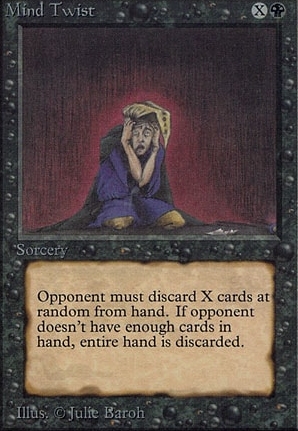
Year: 1993
Artist: Julie Baroh
The first set of Magic: The Gathering (MTG) was released on August 5th, 1993. This set, commonly referenced as “Alpha,” contained 295 “black-bordered” cards and represents what many consider the progenitor of the collectible card game genre. Our beloved card game was developed by mathematics professor and lead game designer, Richard Garfield, PhD. Over the last 30 years, Magic: The Gathering has grown an immense following and now represents one of the most recognizable and highly-played tabletop games in the world. At the time of writing, there are more than 27,000 unique playing cards, each with its own story, art, unique rules – and in some cases, controversy.
The goal of this blog is to venture into the world that has been created by MTG, both on paper and in the communities that gather to play. It is only fitting that our first card, ‘Mind Twist’, comes from Alpha, a set that to this day haunts the eternal formats and the bank accounts of those fortunate enough to own these expensive, limited-release cards.
‘Mind Twist’ evokes strong emotion, whether it is the fearful expression – mouth agape with wide-eyed gaze directed upwards at a subject unseen – or the inescapable feeling of being agonizingly exposed, vulnerable, and anxious. Julie Baroh had this to say about her artwork:
“We were given pretty much carte blanche on the alpha cards, with little description of what the cards did, except mana color and the title. At the time, I was a college student in art school, but not a painter. I was a printmaker and sculpture major, so I used colored pencils and ink. I suffered severe migraine from a childhood spine injury and was often holding an icepack to my head while making art. Mind Twist is an homage to the migraines I dealt with.”
She went on to say that ‘Mind Twist’ depicts a magician for whom magic “backfires and leaves him in agony”. She specifies that, at times, pain is self-imposed and in this way, both the art and the card text reflect the horror of having brought great suffering upon one’s self. Further, the artist explains that the card is in part a self-portrait. At a young age, she made an “impulsive decision” that forever changed [her] life” when she leaned too far out of a screen window that gave way, resulting in falling several stories and sustaining lasting traumatic brain and spinal injury.
For many people who suffer from chronic pain syndromes, fear and guilt often stand in the way of recovery, seeking help, and coming to terms with their new lived experience. In my practice, I see veterans who shoulder similar burdens. Some wonder how life may have been different had they not been in the wrong place at the wrong time. These patients find themselves going from doctor to doctor seeking answers to questions that may never be answered. As a psychiatrist, it is sometimes my place to help a patient come to accept that there may always be pain, or come to terms with the fall-out that their pain has had on their lives (e.g. substance use disorders, disability, and financial hardship).
I find the early game design of ‘Mind Twist’ to be a perfect example of how our beloved game induces feelings in the player that parallel the card mechanics. Let me explain. Although the targeted player knows that it is their opponent that forced them to discard from hand, it is hard to avoid feeling that the resulting anguish is at least in some form self-imposed or that they are a victim of bad luck given that the cards are selected at random to be discarded. Looking back on a game a player may think to themselves “What if I hadn’t discarded THAT card”. This randomization remains prominent in game design 30 years later.
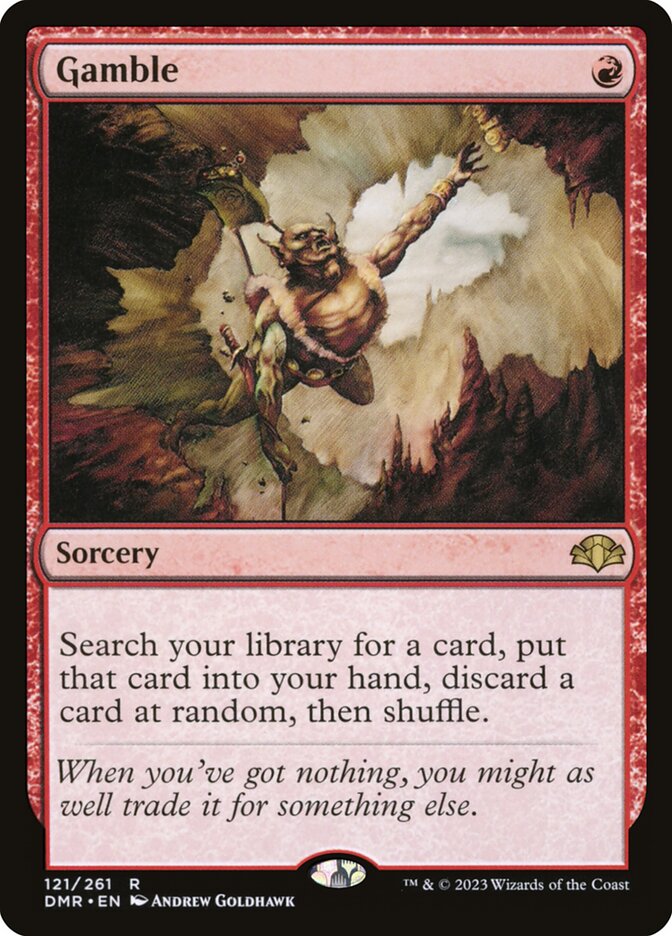
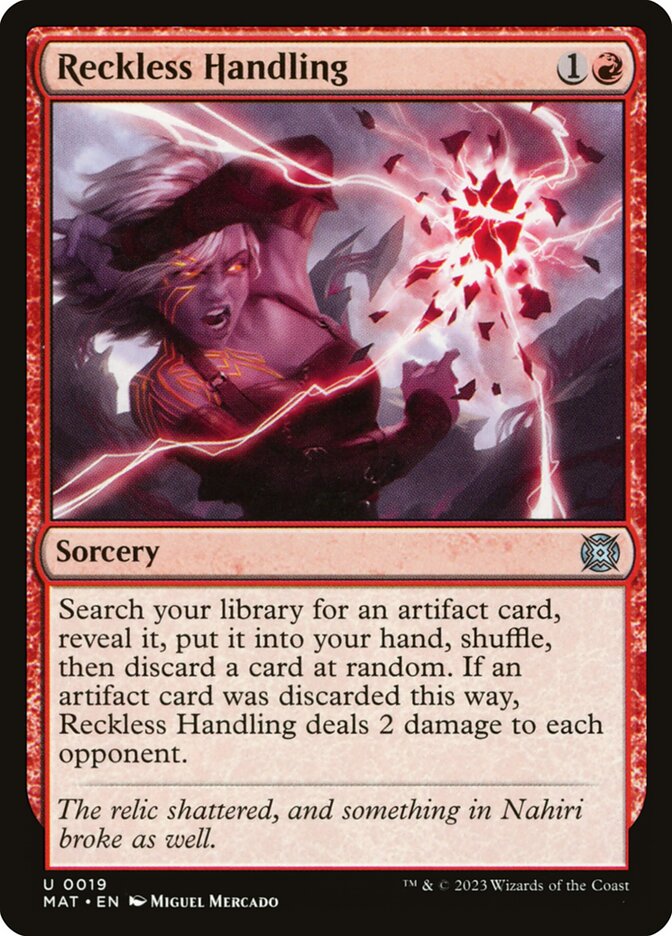
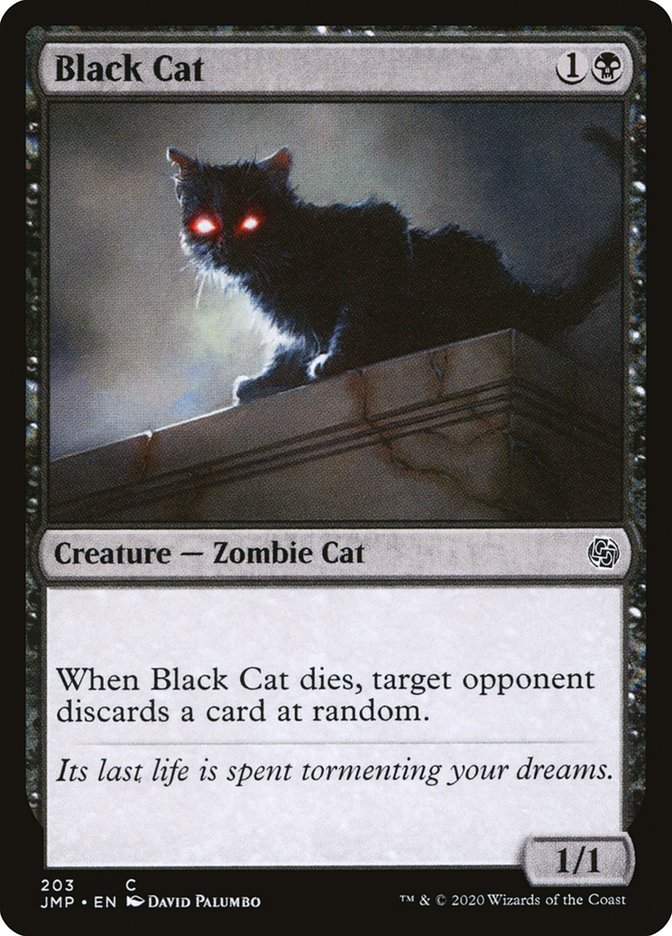
Often these cards are found in red or black spells. Red cards such as ‘gamble’ or ‘reckless handling’ allow a player to search for a coveted card with the knowledge that they will need to randomly discard a card. A calculated high-risk, high-reward game action that typifies the fast-paced and impulsive red wedge from the color pie. Whereas black cards feature random discard that is forced upon a player by their opponent, such as ‘bottomless pit’ or ‘black cat’. In this way, color identity in MTG has been constructed, curated, and cultivated for decades to consistently evoke emotions and particular game states with new cards adding a ‘twist’ to an old theme.
Come back next week when as we continue our journey through Magic’s history!


 Mind Twist MTG
Leave a reply to JDHolek Cancel reply